

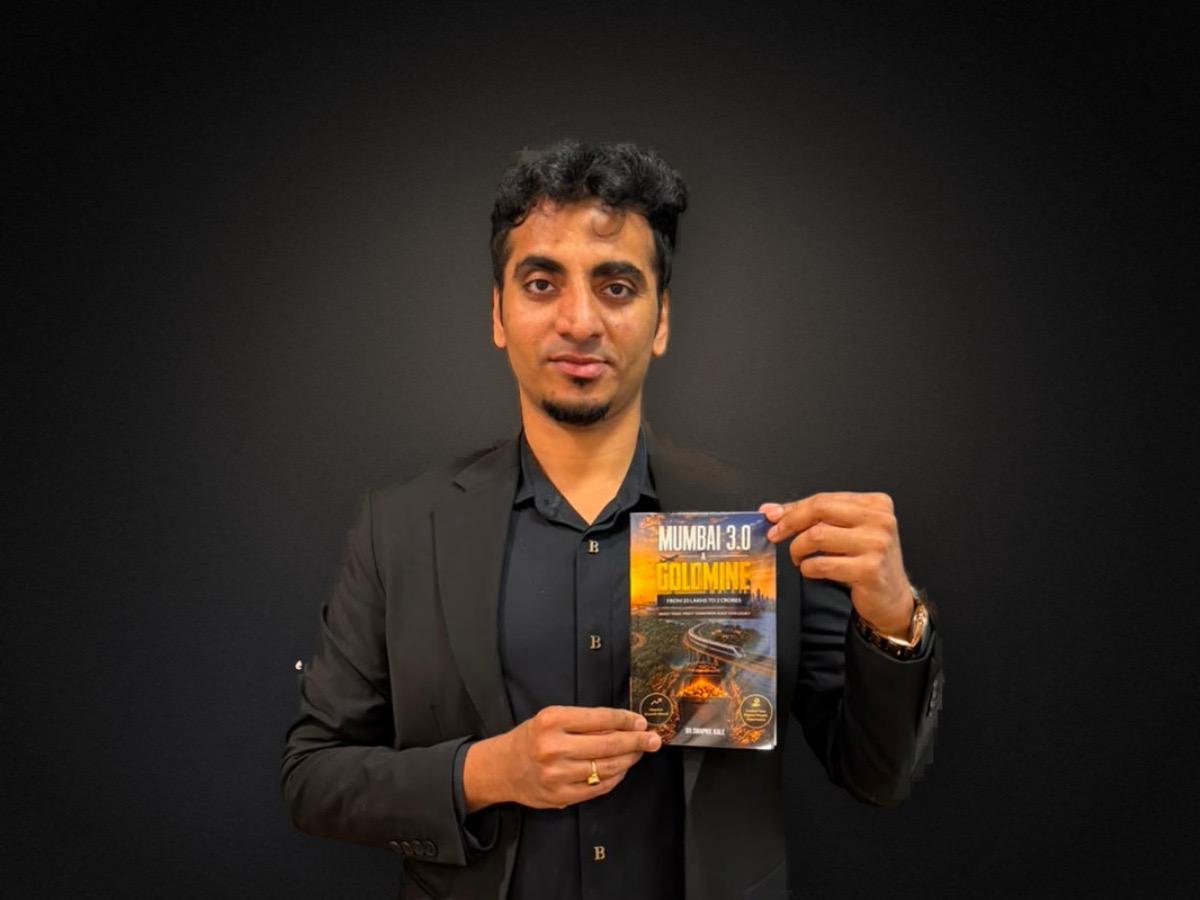
Mumbai’s real estate story is entering a new chapter, and Dr. Swapnil Kale’s newly launched book, “Mumbai 3.0 – A Goldmine”, argues that the biggest opportunities may no longer lie in conventional property investments. The book explores how infrastructure-led growth, emerging urban corridors, and strategic land ownership could shape the next phase of wealth creation across the Mumbai Metropolitan Region (MMR). At a time when investors are closely tracking the impact of the Navi Mumbai International Airport, Atal Setu, metro expansion, and new development zones, the book arrives as a timely examination of where future value may emerge.
What makes the book different is that it is also Dr. Swapnil Kale’s personal story. Coming from a middle-class background, he multiplied his own assets by investing in land after conducting in-depth research on cities and towns where governments were expanding infrastructure. He believes that identifying the right city and entering at the right time played a crucial role in his financial success. Through this book, he shares the lessons from his own journey to show that wealth creation through real estate is possible with research, patience, and informed decision-making.
Rather than focusing on completed developments or established residential markets, “Mumbai 3.0 – A Goldmine” directs attention to the relationship between infrastructure and land appreciation. The book examines how major public projects often trigger long-term economic activity, improved connectivity, and urban expansion, creating opportunities in locations that may initially appear overlooked by mainstream investors. According to the author, some of the most significant wealth creation in real estate occurs before development becomes visible and before demand reaches its peak.
A key theme running through the book is the distinction between buying property and investing in growth corridors. While apartments remain a popular asset class, the book argues that land positioned within future development zones can benefit from broader economic transformation. Through discussions around urban planning, connectivity, and policy-backed expansion, Dr. Kale presents the view that infrastructure has historically been one of the strongest drivers of real estate value creation.
The book also explores regions influenced by large-scale projects such as the Navi Mumbai International Airport, Atal Setu, and planned urban development corridors across the Mumbai Metropolitan Region. These projects are examined not only as infrastructure investments but as catalysts that can reshape population movement, commercial activity, and long-term real estate demand. By connecting infrastructure planning with investment strategy, the book seeks to help readers understand how cities evolve and where future opportunities may emerge.
Another important aspect of “Mumbai 3.0 – A Goldmine” is its focus on timing. The book argues that successful real estate investing is often less about the amount of capital available and more about identifying growth before it becomes obvious. It examines how investors who understand development plans, policy frameworks, and infrastructure expansion may be better positioned to participate in long-term value creation. In doing so, the book challenges the tendency to rely solely on prevailing market sentiment or short-term trends.
The aim of writing this book is also to educate the youth and the middle class about the importance of investing in assets rather than liabilities. Dr. Kale believes that land is one of the biggest wealth-building assets available to ordinary people if approached with the right knowledge and strategy. His vision is to help common people understand the opportunity presented by Mumbai 3.0 and encourage them to start investing during what he sees as an early entry phase, even with a small amount of capital, to potentially build wealth over the coming decade.
Dr. Swapnil Kale is an investor, entrepreneur, and immigration advisor known for helping individuals build long-term global opportunities through informed decision-making. Through his work across business, migration, and investment advisory, he has consistently advocated research-driven planning, legal compliance, and strategic thinking as foundations for sustainable wealth creation.
Speaking about the book, Dr. Kale said, “Most people wait for a location to become popular before they invest. By then, a significant part of the opportunity has already passed. This book is about understanding the forces that create growth including connectivity, infrastructure, planning, and vision, and learning how to identify them early.”
Beyond investment insights, the book serves as a broader commentary on Mumbai’s next phase of urban expansion. As the city’s development footprint extends beyond traditional growth centres, questions around land use, infrastructure planning, and emerging economic corridors are becoming increasingly relevant. “Mumbai 3.0 – A Goldmine” attempts to bring these conversations into a format that is accessible to investors, entrepreneurs, professionals, and anyone interested in understanding how major cities create long-term value.
With infrastructure projects reshaping the geography of opportunity across the Mumbai Metropolitan Region, “Mumbai 3.0 – A Goldmine” positions itself as both a guide and a discussion on the future of real estate investment. By examining the link between infrastructure, timing, and land appreciation, the book offers readers a fresh perspective on where Mumbai’s next wealth creation cycle may unfold.
To know more about investing in Mumbai, visit: www.PlotXDevelopers.com
OR
https://www.instagram.com/plotxdevelopers?igsh=MWR5bzNpZHZyZWRlZA%3D%3D&utm_source=qr
Tags
Mumbai Real Estate Investment
Land Investment in Mumbai
Navi Mumbai International Airport
Infrastructure-Led Growth
