

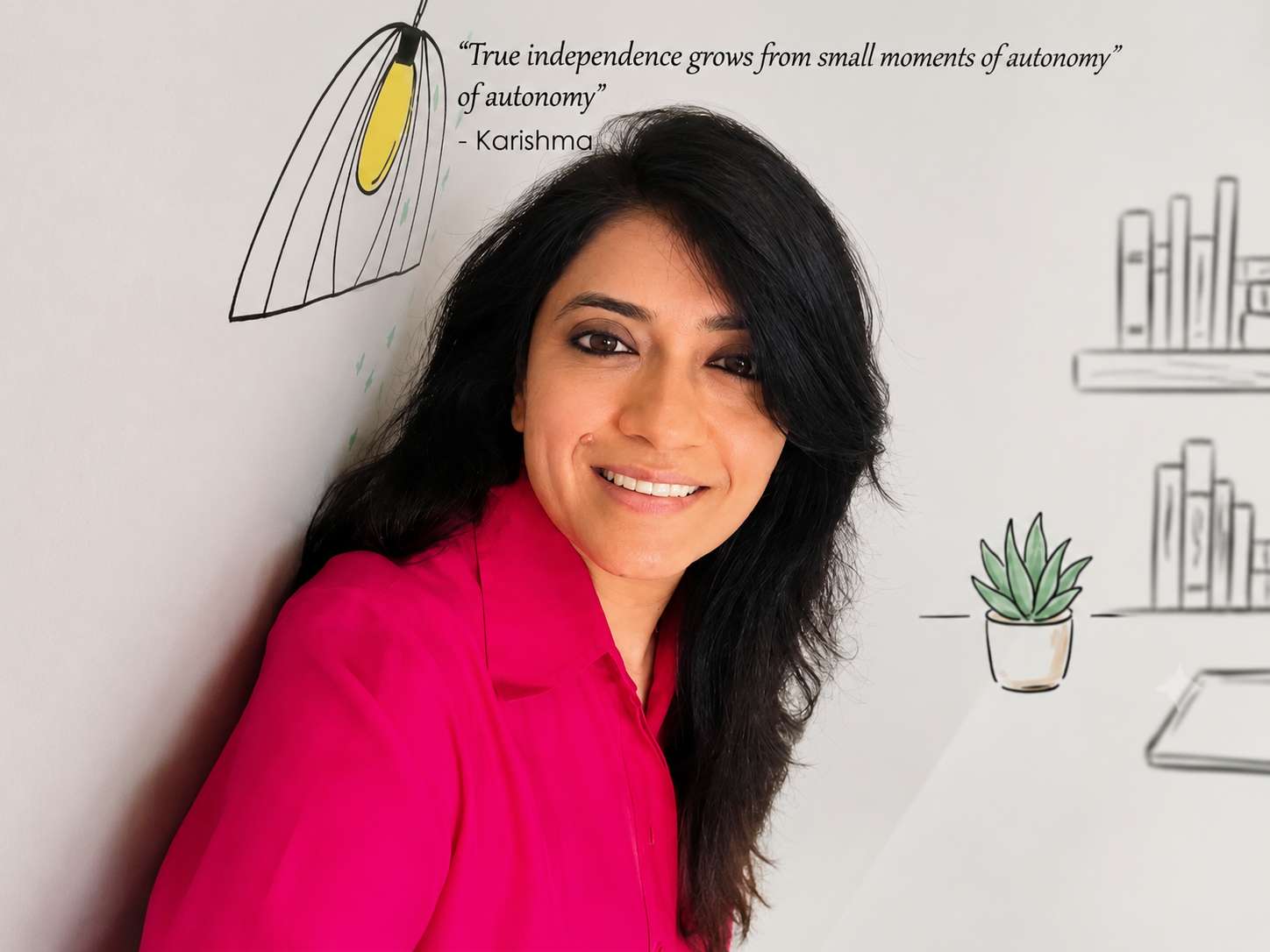
BY KARISHMA
We don’t even realize it, but every time we speak to our children, we are writing the script for their inner voice. Long after a child leaves home, the way their worst moments were handled becomes the echo they hear when they face their own failures.
Yet, in the thick of an exhausting day, it is so easy to forget this. Imagine a common scene played out in countless households: A parent standing over a child during a stressful standoff, watching tiny shoulders tense up under the full weight of adult authority. Voices get raised, threats are issued, and demands for absolute obedience echo through the room until, tear-eyed and defeated, the child finally breaks.
In that moment, a hollow surge of victory can wash over a parent. The behavior stopped. The child listened.
But as the quiet of the evening settled in, a heavy, heartbreaking realization often took its place. Looking back at those interactions, a profound question emerges that every parent must eventually face: When we win every battle with our child, do we actually win?
Success is often measured by immediate compliance. If the bad behavior stops, it is assumed discipline works. But traditional discipline methods like hitting, shouting, and shaming might halt an action in the moment, while the invisible internal price children pay is far too high.
The Hidden Lessons of Control
Let’s dive deep into the gap between what adults think they are teaching and what a child actually internalizes:
- When a child bites, and a parent hits back to “teach them it hurts”. The intention is to teach empathy. But inside, the child learns that ‘their big feelings are too much. When they’ll lose control, they deserve pain’.
- When a child refuses homework, and adults resort to shouting and punishment: The goal is to build a work ethic. But the child hears ‘Making mistakes makes me unworthy. Fear gets me moving, not confidence’.
- When a child takes something they shouldn’t and the reaction is a slap: The intention is to correct their character. In reality, it teaches them ‘Hide better next time. Don’t tell the truth if the truth brings shame’.
- When a teenager fails an exams, disappointment is unleashed by listing everything they do wrong: The hope is to prepare them for the harsh realities of life. What they hear loud and clear is ‘I am a failure’.
Giving Space for Real Learning
Real accountability doesn’t happen in a split second under pressure rather it requires space to process. When a child makes a mistake, forcing an immediate, insincere apology teaches compliance, not empathy.
Instead children need time to cool down, realize the impact of their actions, and genuinely feel ready to repair the situation. More importantly, they learn how to repair things by watching adults do it. When parents show the way by practicing patience, managing their own big emotions, and sincerely apologizing when they lose their cool, children naturally copy what they see. If we practice accountability, our kids will do the same.
The Power of Choice over Force
True independence grows from small moments of autonomy. When parents constantly impose, dictate or force every detail, a child either breaks down or learns to resist.
Giving children the space to make small decisions like choosing their own outfit, deciding between two healthy snack options, or managing their own routine, builds self-trust. Guidance is not about forcing control, it is about setting safe boundaries while honoring their voice. When children feel heard and respected in small choices, they are far more likely to cooperate when big decisions matter.
The Toll of Quick Obedience
Years down the road, parents may find themselves looking at a child who obeys quickly, never talks back, and walks on eggshells. On the outside, it looks like a parenting victory. But looking deeper, it is critical to ask if that approach raised a child who can actually:
- Trust themselves
- Repair their own mistakes
- Ask for help when they are drowning
- Handle failure with resilience
- Feel worthy even they are imperfect
If a child only complies out of fear, they never learn the actual skills required to navigate life. Science tells us that while fear can abruptly halt a behavior in the moment, it is the connection that teaches the lasting skills behind the behavior.
Shaping their Inner Voice
Children do not need pain to learn empathy, they need steady guidance to build it. The ultimate goal of parenting is not to raise a child who fears consequences or grows up hiding their true selves to keep the peace.
The real goal is to raise a child who carries a parent’s voice as their inner strength.
When children make a mistake in the future, they shouldn’t have an angry parental voice shouting in their head, telling them they are a failure. They need to remember a voice of safety that tells them ‘You messed up, but you are strong enough to fix this’.
The message for today’s parents is to lay down the weapons of control, anger, and shaming. Children are not adversaries to be conquered in a battle of wills. By choosing connection over correction, parents ensure that they don’t just win the argument today, but that they keep their child’s heart for a lifetime. Also read (Beyond the Spoon: Why connection is the secret ingredient)
AUTHOR: KARISHMA
