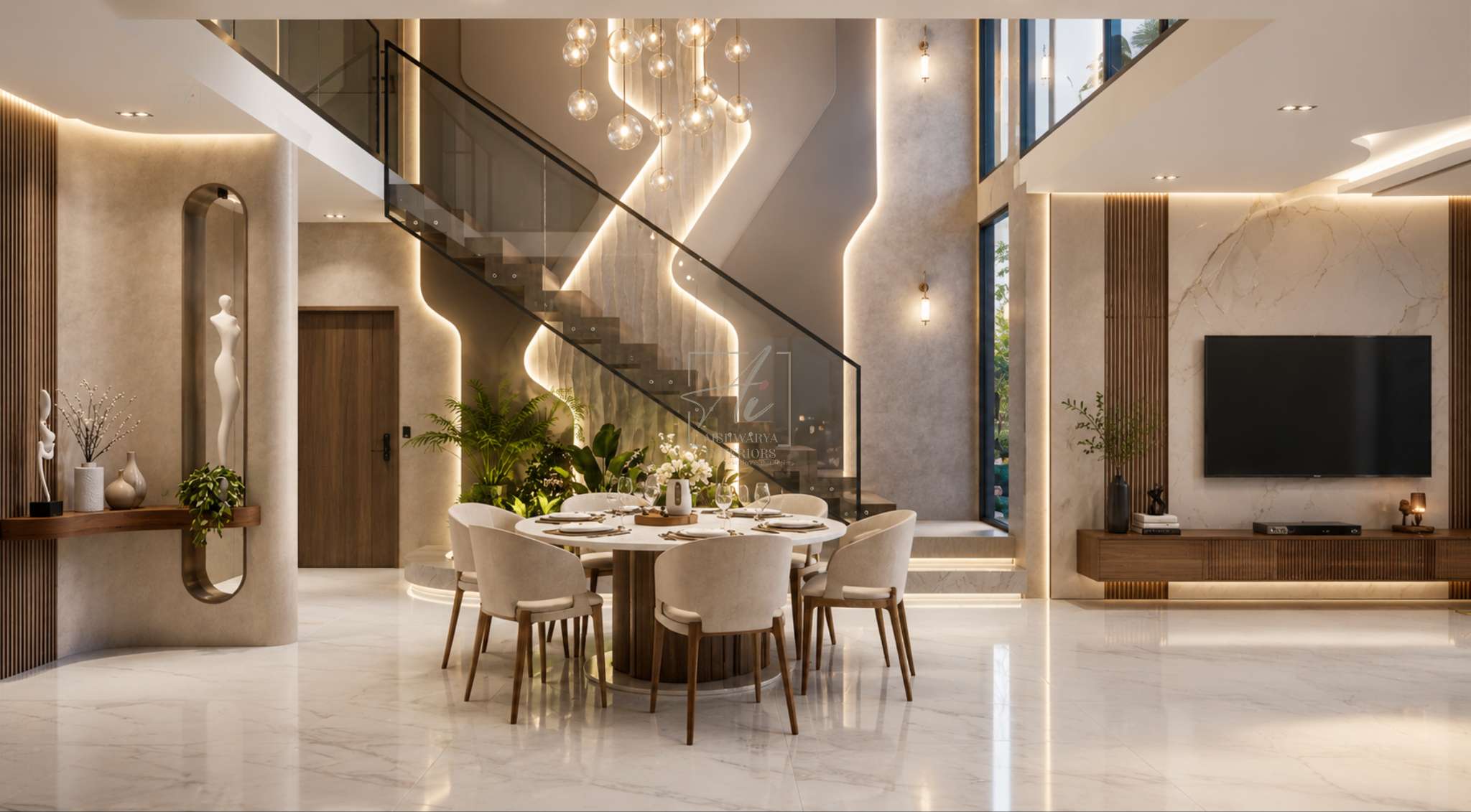
On the fourteenth floor of a residential tower off Sarjapur Road, a young couple is redrawing the boundaries of a 1,450 square foot 3BHK. What used to be a formal, rarely-used dining room is now a fold-away home office. A boxy foyer has become a shoe-and-storage wall disguised behind fluted panelling. Their story is an increasingly familiar one across Bengaluru's high-rises, where the challenge is no longer simply decorating an apartment, but re-engineering how a family actually lives inside it.
This quiet redesign of everyday life is why demand for apartment interior designers in Bangalore has climbed steadily over the past years — not as a luxury indulgence, but as a practical response to how the city itself has changed.
The Vertical Living Paradox
Bengaluru's apartment stock has grown taller and denser even as household needs have grown more complex. Multi-generational families, work-from-home professionals, and young couples raising children are frequently sharing the same 3BHK and 4BHK floor plans, each carrying different, sometimes conflicting, expectations of the same rooms. A living room must double as a play area by day and a formal reception space by evening. A study must serve one parent's video calls while a child does homework at the same desk an hour later.
This is the paradox of vertical living: more people are living in less footprint per person than a generation ago, yet expectations for comfort, privacy, and aesthetics have only risen. Developers optimise floor plans for saleable area, not for how a specific family actually spends its day — which is precisely the gap that apartment interior design has stepped in to close.
Designing Around the New Indian Household
Perhaps the most significant shift is the return of the multi-generational home. Many Bengaluru families now house grandparents, working professionals, and school-going children under one roof — a configuration that older apartment layouts, built around the nuclear family, were never designed to support.
Interior designers are responding with layered privacy: a grandparent's room positioned away from evening traffic and noise, ensuite bathrooms with grab rails built in discreetly rather than added later, and lighting schemes that shift from bright task lighting for study corners to warmer, gentler tones in shared lounges. None of this is visible from a floor plan; it only emerges once a designer maps how each family member actually moves through the home across a single day.
The other defining brief of the past two years has been the home office. What began as a pandemic-era compromise — a laptop balanced on a dining table — has matured into a genuine design category. Owners now ask for acoustic separation from the rest of the home, dedicated storage for files and equipment, and a backdrop considered enough for video calls, all folded into rooms that must revert to guest bedrooms or family space on weekends.
Storage as the New Status Symbol
Ask any Bangalore-based designer what apartment owners request most often, and the answer is rarely a statement chandelier or an accent wall — it is storage solutions. In compact floor plans, a well-planned utility, a full-height wardrobe system, or a modular kitchen with intelligent pull-out units has become the real luxury, because it is what allows a home to look calm rather than cluttered.
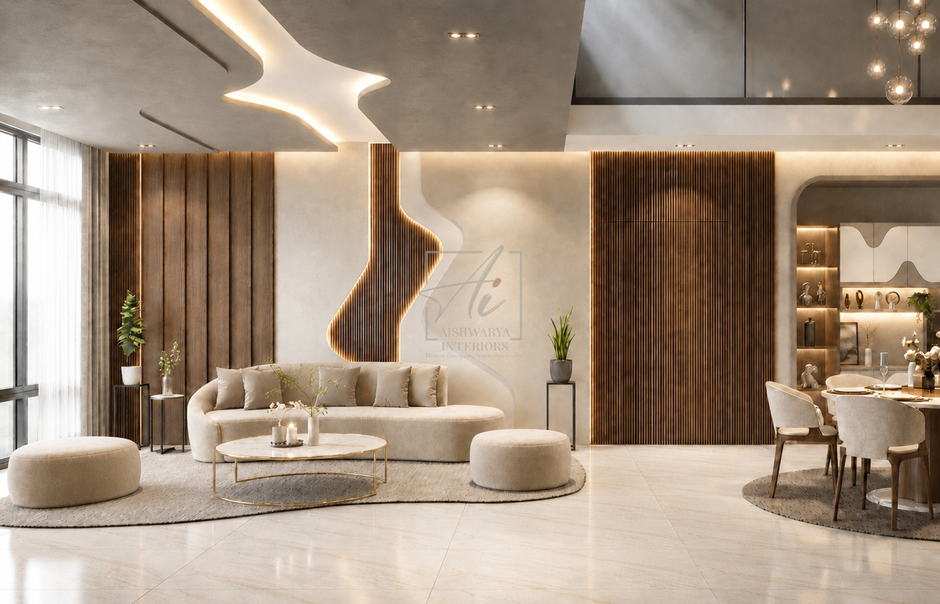
This has pushed modular furniture and bespoke carpentry to the centre of most apartment briefs. Furniture that folds, nests, or converts — a study desk that becomes a dressing unit, a dining table that extends only when guests arrive — allows a single room to serve two or three purposes without ever feeling temporary or improvised.
Borrowed Light, Considered Materials
High-rise apartments also bring a recurring physical constraint: limited natural light on lower and mid-level floors, and narrow balconies that receive harsh western sun on others. Designers are increasingly working with light-reflective materials, strategically placed mirrors, and glazed partitions between rooms to borrow daylight across a floor plan rather than trapping it in a single space. Balconies, meanwhile, are being reimagined as usable extensions of the home — shaded, planted, and furnished — rather than leftover utility areas.
Why Bangalore Homeowners Are Choosing Professional Design Over DIY
With online inspiration readily available, many owners begin by attempting a DIY approach, only to run into the same wall: an apartment's plumbing points, electrical layout, and structural columns are fixed, and a Pinterest board rarely accounts for them. Aishwarya Interiors, the Bangalore-based residential design studio founded in 2004 by Yogesh and Laxmi Deshmukh, notes that most enquiries now begin not with a mood board, but with a specific problem — too little storage, an awkward corridor, a room that never gets used.
"People aren't looking for a designer to make their home look nice in photographs anymore," the studio observes. "They're looking for someone to make the apartment work the way their family actually lives — which is a far more technical brief than it sounds."
That shift — from aesthetics-first to function-first — is arguably the defining trend in home interiors in Bangalore today. As apartment sizes plateau and household compositions grow more varied, the designers best positioned to win trust are not necessarily those with the boldest portfolios, but those who can translate a family's daily routine into a floor plan that quietly, invisibly, just works.
For a city adding vertical housing faster than almost any other in India, that invisible engineering — more than any single finish or fixture — is what will define the next decade of apartment interior design in Bangalore.